
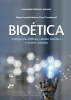
Bioética: Inteligencia artificial, cambio climático y muerte asistida
Palabras clave:
INTELIGENCIA ARTIFICIAL, ÉTICA EMPRESARIAL, REDES NEURONALES, INTERPRETACIÓN INTERCULTURAL, ECUADORSinopsis
Si se considera que la vida es el regalo más valioso para los seres humanos, hoy enfrenta problemas y desafíos que intentan modificarla, limitarla o incluso aniquilarla. La bioética reflexiona sobre estas tensiones que acompañan a la existencia, en su sentido más amplio, con el propósito de encontrar soluciones pertinentes e inclusivas.
La inteligencia artificial y sus implicaciones en la vida humana, junto con las consecuencias del cambio climático y la complejidad de la muerte asistida, requieren un abordaje riguroso, abierto e interdisciplinario que involucre a expertos en ética, derecho, antropología, biología y otras ciencias. Iniciar un diálogo reflexivo sobre la vida y sus desafíos teórico-prácticos resulta urgente, pues las consecuencias de estos problemas repercuten, directa o indirectamente, en la calidad de vida de las personas y en el equilibrio ecosistémico del planeta. Los trabajos aquí reunidos surgen de investigadores que invitan a la reflexión crítica y responsable.
Capítulos
-
Nuevos horizontes de la filosofía ante el auge de la(s) inteligencia(s) artificial(es)
-
Ética empresarial en la era de la inteligencia artificialuna reflexión desde la filosofía
-
Implicaciones éticas de la inteligencia artificial
-
Hacia una perspectiva ética e integral del uso de la Inteligencia Artificial aplicada a la educaciónapuntes para la reflexión
-
Inteligencia artificial y ética del lenguajedel atomismo lógico a las redes neuronales artificiales
-
Transhumanismo y la inteligencia artificialun análisis de sus implicaciones éticas para la humanidad
-
La bioética y el cambio climáticouso humano de plantas medicinales contaminadas1
-
La eutanasia en Ecuadoranálisis de la sentencia 67-23-In/24 de la Corte Constitucional
Referencias
Abad, D. y Poluche, B. (2019). Comparación de los niveles de plomo y carbono presentes en las plantas medicinales adquiridas en tres mercados y en cultivos de tres zonas urbanas de Cuenca (Sur, Centro histórico y Norte. Cuenca, Ecuador. Tesis de pregrado UPS.
Abbate, S. (2022). Transhumanismo y gnosis: un paralelismo. Scientia et Fides, https://doi.org/10.12775/SetF.2022.010
Abe, R y Ohtani, K. (2013). Traditional botanical knowledge of medicinal plants in a quilombola community in the Atlantic Forest of northeastern Brazil. http://bit.ly/3WjwV56
Acosta, J. y Salcedo, R. (2020). La medicina tradicional como práctica profesional reconocida por la OMS. Revista Internacional de Salud Pública, 15(3), 45-58.
Aguirre, A. (2014). Colección y caracterización morfológica de la diversidad de plantas medicinales de las provincias de Loja y Cotopaxi. Universidad Central del Ecuador, Facultad de Ciencias Agrícolas.
Akerele, O. (1993). Las plantas medicinales: un tesoro que no debemos desperdiciar. Foro Mundial de la Salud, 14(4), 390-395. http://bit.ly/3WfwSHx
Alba, J. y Calero, M. (2023). Transhumanismo: Una perspectiva desde las diferencias biológicas basadas en la desigualdad de riqueza. Revista de Filosofía, 40(105), 119-130. https://doi.org/10.5281/zenodo.7857567
Alfredo, R., Echeverria, V., Jin, Y., Yan, L., Swiecki, Z., Gašević, D. y Martinez-Maldonado, R. (2024). Human-centred learning analytics and AI in education: A systematic literature review. Computers and Education: Artificial Intelligence, 6, 100215. https://doi.org/https://doi.org/10.1016/j.caeai.2024.100215
Ali, R., Hussain, A., Nazir, S., Khan, S. y Khan, H. U. (2023). Intelligent Decision Support Systems - An Analysis of Ma-chine Learning and Multicriteria Decision-Making Methods. Applied Sciences, 13(22), 12426. https://doi.org/10.3390/app132212426
Allianz Assistance (2023) “¿Qué es un testamento vital y cómo hacerlo?”. https://bit.ly/3KNysxM
Almeida, R. (2000). Uso de plantas medicinales. Editorial Árbol S.A. de C.V.
Aparicio-Gómez, O. y Cortés Gallego, M. (2024). Desafíos éticos de la inteligencia artificial en la personalización del aprendizaje. Revista Interamericana de Investigación Educación y Pedagogía 17(2), 377-392. https://doi.org/10.15332/25005421.10000
Apel, K. O. (1985). La transformación de la filosofía. Taurus I.
Asimov, I. (1988). Yo, robot. Edhasa.
Ayala-Carabajo, R y Llerena-Izquierdo, J. (2024). Bibliometric Review on a Hybrid Learning Model with VLEs from a Higher Education Context. En J. P. Salgado-Guerrero, H. R. Vega-Carrillo, G. García-Fernández y V. Robles-Bykbaev (Eds.), Systems, Smart Technologies and Innovation for Society (pp. 148-157). Springer Nature Switzerland. https://doi.org/10.1007/978-3-031-52090-7_15
Barocas, S. y Selbst, A. (2016). Big Data’s Disparate Impact. California Law Review, 104(3), 671-732.
BBC (17 de julio de 2017). El falso Barack Obama creado con inteligencia artificial capaz de hablar como si fuera el original. https://bit.ly/46OPLWO
BBC News Mundo (7/06/2019). Qué son la eutanasia pasiva y activa y en qué se diferencian del suicidio asistido. https://bit.ly/3IOmK5r
Belkin, M. (2024). The Necessity of Machine Learning Theory in Mitigating AI Risk. ACM / IMS J. Data Sci., 1(3). https://doi.org/10.1145/3643694
Bellman, R. E. (1978). An Introduction to Artificial Intelligence: Can Computers Think? Boyd & Fraser Publishing Company.
Bermúdez, A., Oliveira, M. A. y Velázquez, D. (2005). La investigación etnobotánica sobre plantas medicinales: Una revisión de sus objetivos y enfoques actuales. INCI, 30(8).
Bicknell, K., Brust, C. y Settles, B. (2023). How Duolingo’s AI Learns what you Need to Learn: The language-learning app tries to emulate a great human tutor. IEEE Spectrum, 60(3), 28-33. https://doi.org/10.1109/MSPEC.2023.10061631
Binet, A. y Simon, T. (1916). The development of intelligence in children (the Binet-Simon Scale). The Training School.
Binns, R. (2022). Human Judgment in algorithmic loops: Individual justice and automated decision-making. Regula-tion & Governance, 16(1), 197-211. https://doi.org/10.1111/rego.12358
Boden, M. (2016). AI: Its Nature and Future. Oxford University Press.
Bongiorno, A., De La Torre, L. y Caffaro, F. (2022). Generative design in the digital era: A review. Journal of Computing and Information Science in Engineering, 22(1), 1-20.
Bostrom, N. (2002). Riesgos existenciales: Análisis de escenarios de extinción humana y peligros relacionados. Jour-nal of Evolution and Technology.
Bostrom, N. (2005). Valores transhumanistas. Universidad de Oxford.
Botwe, B., Antwi, W., Arkoh, S. y Akudjedu, T. (2021). Radiographers’ perspectives on the emerging integration of artificial intelligence into diagnostic imaging: The Ghana study. Journal of Medical Radiation Sciences, 68(3), 260-268. https://doi.org/https://doi.org/10.1002/jmrs.460
Bowker, G. C. (2014). The Theory/Data Thing. International Journal of Communication, 8, 1795-1799.
Brockman, J. (Ed.). (2007). El nuevo humanismo y las fronteras de la ciencia. Kairós.
Bruderer, H. (2020). Milestones in analog and digital computing (3rd ed.). Springer.
Brynjolfsson, E. y McAfee, A. (2014). The second machine age: Work, progress, and prosperity in a time of brilliant technologies. WW Norton & company.
Burrell, J. (2016). How the machine ‘thinks’: Understanding opacity in machine learning algorithms. Big Data & Soci-ety, 3(1), 2-12. https://doi.org/10.1177/2053951715622512
Burton, J. (2023). Algorithmic extremism? The securitization of artificial intelligence (AI) and its impact on radicalism, polarization and political violence. Technology in Society, 75, 102262. https://doi.org/https://doi.org/10.1016/j.techsoc.2023.102262
Calle, D. y Zhindon, J. (2019). Evaluación de la presencia de plomo a través de huertos hortícolas agricultura urbana en cinco colegios ubicados en el distrito Sur de Cuenca. Tesis de pregrado UPS.
Camargo Brito, R. y Ried, N. (2024). Los desafíos del transhumanismo a la bioética. Acta Bioethica, 30(1), 9-17. https://doi.org/10.4067/S1726-569X2024000100009
Cardona, J. y Rivera, A. (2012). Plantas medicinales en Colombia para el tratamiento de la diabetes y la anemia: Un enfoque etnobotánico. Universidad Nacional de Colombia.
Carrera, P. (2016). Determinación microbiológica y de metales pesados en toronjil (Melissa officinalis) y taraxaco (Taraxacum officinale) expendidos en los diferentes mercados del Distrito Metropolitano de Quito. Universidad Central del Ecuador.
Casar-Corredera, J. (2023). Inteligencia artificial generativa. Anales de la Real Academia de Doctores, 8(3), 475-489.
Castillo, P. (2023). Does there exist a need for a ‘new’ educational ideal of rationality? The crossroads between trans-humanism and Israel Scheffler’s conception of critical thinking. Encyclopaideia, 27(66), 49-61. https://doi.org/10.6092/issn.1825-8670/16490
Chen, X., Cheng, G., Zou, D., Zhong, B. y Xie, H. (2023). Artificial Intelligent Robots for Precision Education. Educa-tional Technology & Society, 26(1), 171-186. https://www.jstor.org/stable/48707975
Chesterman, S. (2020). Artificial intelligence and the limits of legal personality. International & Comparative Law Quarterly, 69(4), 819-844. https://doi.org/10.1017/S0020589320000366
Clínica de la Universidad de Navarra (2023) Diccionario médico: autonomía del paciente. https://bit.ly/46REiWp
Coeckelbergh, M. (2011). Human development or human enhancement? A methodological reflection on capabilities and the evaluation of information technologies. Ethics and Information Technology, 13, 81-92. https://doi.org/10.1007/s10676-010-9231-9
Coeckelbergh, M. (2019). Artificial intelligence: some ethical issues and regulatory challenges. Technology and regu-lation, 2019, 31-34. https://doi.org/10.26116/techreg.2019.003
Coeckelbergh, M. (2020a). AI ethics. MIT Press.
Coeckelbergh, M. (2020b). Artificial intelligence, responsibility attribution, and a relational justification of explaina-bility. Science and engineering ethics, 26(4), 2051-2068. https://doi.org/10.1007/s11948-019-00146-8
Coeckelbergh, M. (2022). Robot ethics. MIT Press.
Comisión Europea, Grupo Independiente de Expertos de Alto Nivel sobre Inteligencia Artificial. (2019). Directrices éticas para una IA fiable: https://ec.europa.eu/newsroom/dae/document.cfm?doc_id=60423
Copi, I. y Cohen, C. (2014). Introducción a la lógica. Limusa.
Corbett-Davies, S., Gaebler, J. D., Nilforoshan, H., Shroff, R. y Goel, S. (2024). The measure and mismeasure of fairness. J. Mach. Learn. Res., 24(1).
Correa Montoya, L. (2021). Muerte Digna. Lugar Constitucional y Núcleo Esencial de un Derecho Humano Emergente. Opinión Jurídica, 20(41), 127-54. https://doi.org/10.22395/ojum.v20n41a4
Corte Constitucional Ecuador (05/02/2024). Sentencia 67-23-IN/24. https://bit.ly/3JJKLLk
Cortina, A. (2016). Ética de la empresa. Trotta.
Cortina, A. (2017). Ética aplicada y democracia radical. Tecnos.
Cortina, A. (2018). Aporofobia, el rechazo al pobre: un desafío para la democracia. Paidós.
Cortina, A. (2019). Ética de la Inteligencia Artificial. Anales de La Real Academia de Ciencias Morales y Políticas, 379-394.
Cortina, A. (2019). Ética sin moral. Tecnos.
Cortina, A. (2022). Los desafíos éticos del transhumanismo. Pensamiento. Revista De Investigación E Información Filosófica, 78 (298 S. Esp), 471-483. https://doi.org/10.14422/pen.v78.i298.y2022.009
Cuéllar, A., Ramírez, J. y López, M. (2015). Las plantas como sumideros de gases de efecto invernadero y su papel en la mitigación del cambio climático. Revista de Ecología y Medio Ambiente, 23(2), 56-73.
Cvik, J. (16/02/2024). Homicidio Simple: Un Análisis de su Condicionalidad Constitucional. Meythaler y Zambrano Abogados. https://bit.ly/4m2t9aQ
Das, S. R. y Madhusudan, J. V. (2024). Perceptions of Higher Education Students towards ChatGPT Usage. International Journal of Technology in Education, 7(1), 86-106.
Dawkins, R. (1976). The selfish gene. Oxford University Press.
De la Torre, L., Navarrete, H., Muriel, P., Macía, M. J. y Balslev, H. (2008). Enciclopedia de las plantas útiles del Ecuador. Herbario QCA, Pontificia Universidad Católica del Ecuador. https://bit.ly/3VF242w
De Maio, C. (2024). Institutional responses to ChatGPT: Analysing the academic integrity policies of four public and private institutions of higher education in Australia. Journal of Academic Language and Learning, 18(1 SE-Responding to the opportunities and challenges of generative AI), T1-T8. https://journal.aall.org.au/index.php/jall/article/view/917
Degli-Esposti, S. (2023). La ética de la inteligencia artificial. Editorial Consejo Superior de Investigaciones Científicas. https://bit.ly/42nRWzg
Dehaene, S. (2011). The number sense: How the mind creates mathematics. Oxford University Press.
Dennett, D. (2006). Dulces sueños. Obstáculos filosóficos para una ciencia de la conciencia. Katz.
Denton, D. (2009). El despertar de la consciencia. La neurociencia de las emociones primarias. Paidós.
Derecho UNED (2024). Clases y características de las Sentencias del Tribunal Constitucional. https://bit.ly/4p7QTgB
Dewey, J. (1910). How we think. D.C. Heath & Co.
Diakopoulos, N. (2016). Algorithmic accountability: A primer. Columbia Journalism School.
Diario El Universo (20/11/2023). “‘Lo que vivo es doloroso, solitario y cruel’, dice Paola Roldán en la audiencia de su pedido de acceso a la eutanasia. https://bit.ly/4m6r4Lc
Díaz Alzate, M. V., González-Cortes, J. H. y Gómez Tabares, A. S. (2022). Papel de las tecnologías digitales en la consolidación del posthumanismo como nueva forma de humanismo. Revista de Filosofía, 39(102), 346-362. https://doi.org/10.5281/zenodo.7045669
Diccionario Panhispánico de Español Jurídico (2023). https://bit.ly/48OWEK6
Diéguez, A. (2017). Transhumanismo. La búsqueda tecnológica del mejoramiento humano. Herder
Diéguez, A. (2021). Cuerpos Inadecuados. El desafío transhumanista a la filosofía. Herder.
Dobre, C. E. y Pavón, R. G. (2024). Singularidad individual versus “singularity”. Una crítica al transhumanismo desde el pensamiento de Søren Kierkegaard. Tópicos, 69, 389-420. https://doi.org/10.21555/TOP.V690.2503
Estrada-García, A. y Narváez, J. P. (2024). ChatGPT y la superficialidad del conocimiento: implicaciones académicas y éticas en el siglo XXI. Yachana Revista Científica, 13(2), 19-36. https://doi.org/10.62325/10.62325/yachana.v13.n2.2024.911
Etxeberria Guridi, J. F. (2024). The use of artificial intelligence (AI) systems for remote biometric identification in pub-licly accessible spaces in the European AI law. Actualidad Jurídica Iberoamericana, 21, 528-565.
Etzioni, A. y Etzioni, O. (2017). Incorporating ethics into artificial intelligence. The Journal of Ethics, 21, 403-418. https://doi.org/10.1007/s10892-017-9252-2
Expreso (08/02/2024). ¿Qué es la eutanasia y cómo se aplicaría en Ecuador? https://bit.ly/4phcHXe
Fallahi, S., Mellquist, A.-C., Mogren, O., Listo Zec, E., Algurén, P. y Hallquist, L. (2023). Financing solutions for circular business models: Exploring the role of business ecosystems and artificial intelligence. Business Strategy and the Environment, 32(6), 3233-3248. https://doi.org/10.1002/bse.3297
Famaye, T., Bailey, C. S., Adisa, I. y Irgens, G. A. (2024). What Makes ChatGPT Dangerous Is Also What Makes It Special: High-School Student Perspectives on the Integration or Ban of Artificial Intelligence in Educational Contexts. International Journal of Technology in Education, 7(2), 174-199.
Farrow, R. (2023). The possibilities and limits of XAI in education: a socio-technical perspective. Learning, Media and Technology, 48(2), 266-279. https://doi.org/10.1080/17439884.2023.2185630
Fernández, A. (2019). Auditoría algorítmica en inteligencia artificial. Revista de Ética Empresarial, 15(2), 45-58.
Fernández, J. (2016). Captura de carbono en hortalizas: Un análisis de su impacto ambiental en Ecuador. Universidad Politécnica Salesiana.
Fernández, J. L. (2021). Hacia un Humanismo Digital Disputatio. Philosophical Research Bulletin, 10(17), 107-130.
Ferry, L. (2017). La revolución transhumanista. Cómo la tecnología y la uberización del mundo van a transformar nuestras vidas. Alianza Editorial
Flogie, A. y Aberšek, B. (2022). Artificial Intelligence in Education. In Active Learning Theory and Practice. IntechOpen. https://doi.org/10.5772/intechopen.96498
Flores-Vivar, J. M. y García-Peñalvo, F. J. (2023). Reflections on the ethics, potential, and challenges of artificial intelli-gence in the framework of quality education (SDG4). Comunicar, 31(74), 37-47. https://doi.org/10.3916/C74-2023-03
Floridi, L. (2010). The Cambridge Handbook of Information and Computer Ethics. Cambridge University Press.
Floridi, L. y Chiriatti, M. (2020). AI4People-An ethical framework for a good AI society: Opportunities, risks, princi-ples, and recommendations. Minds and Machines, 30(4), 1-36.
Floridi, L. y Cowls, J. (2019). A unified framework of five principles for AI in society. Harvard Data Science Review, 1(1), 1-18. https://doi.org/10.1162/99608f92.8cd550d1
FM-2030 (1989). Are you a transhuman? Monitoring and stimulating your personal rate of growth in a rapidly chang-ing world. Warner Books.
Forero-Corba, W. y Negre Bennasar, F. (2024). Técnicas y aplicaciones del Machine Learning e inteligencia artificial en educación: una revisión sistemática. RIED-Revista Iberoamericana de Educación a Distancia, 27(1 SE-Estudios e investigaciones), 209-253. https://doi.org/10.5944/ried.27.1.37491
Gadamer, H. G. (2013). Verdad y Método: Fundamentos de una hermenéutica filosófica. Sígueme.
Galarza, P. (2017). Determinación de la concentración de elementos contaminantes y bacterias patógenas en un sistema de agricultura urbana compuesto por hortalizas, implementado en la Universidad Politécnica Salesiana. Tesis de pregrado UPS.
Gallegos-Zurita, M. y Gallegos-Z, D. (2017). Plantas medicinales utilizadas en el tratamiento de enfermedades de la piel en comunidades rurales de la provincia de Los Ríos – Ecuador. Anales de la Facultad de Medicina, 78(3), 315.
Gallifant, J., Bitterman, D., Celi, L., Gichoya, J., Matos, J., McCoy, L. y Pierce, R. (2024). Ethical debates amidst flawed healthcare artificial intelligence metrics. npj Digital Medicine, 7(243). https://doi.org/10.1038/s41746-024-01242-1
GAMUT, L. T. F. (2002). Introducción a la lógica. Editorial Universitaria de Buenos Aires.
Garcés Castellote, E. y Jiménez Rodríguez, M. (2016). Transhumanismo: cómo el mejoramiento humano cambiará el cuidado: un análisis desde la teoría general del déficit de autocuidado. Ene, 10 (3). https://bit.ly/4ngPVwv
García-Peñalvo, F., Llorens Largo, F. y Vidal, J. (2023). The new reality of education in the face of advances in generative artificial intelligence. https://doi.org/10.5944/ried.27.1.37716
García, M. (2020). La discriminación algorítmica y sus implicaciones éticas. Harvard Business Review, 30(4), 112-125.
García, M. y Sánchez, P. (2020). Inteligencia Artificial y Ética Empresarial. Harvard Business Review.
García, P. (2004). Los riesgos de toxicidad en la medicina tradicional: Una revisión de casos clínicos en América Latina. Revista Latinoamericana de Salud Pública, 12(1), 34-50.
Gardner, H. (1994). Estructuras de la mente: La Teoría de las inteligencias múltiples. FCE.
Gardner, H. (1999). Intelligence reframed: Multiple intelligences for the 21st century. Basic Books.
Gaviria, J. L. (2024). ¿Transhumanismo ‘contra’ educación? Teoría de la Educación, 36(2), 1-23. https://doi.org/10.14201/teri.31762
Ghaleb, M. y Alshiha, A. (2023). Empowering Self-Management: Unveiling the Impact of Artificial Intelligence in Learning on Student Self-Efficacy and Self-Monitoring. Eurasian Journal of Educational Research, 2023(107), 68-94.
Gillani, N., Eynon, R., Chiabaut, C. y Finkel, K. (2023). Unpacking the “Black Box” of AI in Education. Educational Technology & Society, 26(1), 99-111. https://www.jstor.org/stable/48707970
Gitelman, L. (Ed.). (2013). “Raw Data” Is an Oxymoron. MIT Press.
Goff, P. (2019). Galileo´s error. Foundations for a new science of consciousness. Pantheon Books.
Gómez-Baggethun, E., Corbera, E. y Reyes-García, V. (2010). Traditional ecological knowledge and global environmen-tal change: Research findings and policy implications. Ecology and Society, 15(4), 28.
González Ramírez, Y. J. (2024). Transhumanismo: una versión de la «Transfinitud» garcíabaquiana. Bajo Palabra, 37, 395-412. https://doi.org/10.15366/bp2024.37.034
González, R. (2022). Decisiones algorítmicas y justicia social. Editorial Ariel.
González, R. (2022). Transparencia y explicabilidad en sistemas de inteligencia artificial. Editorial Tecnos.
Goñi Sein, J. L. (2019). Innovaciones tecnológicas, inteligencia artificial y derechos humanos en el trabajo. Documentación Laboral, 57-72, II (117) https://bit.ly/4mJXgUS
Goodfellow, I., Pouget-Abadie, J., Mirza, M., Xu, B., Warde-Farley, D., Ozair, S. y Courville, A. (2014). Generative adver-sarial nets. Advances in Neural Information Processing Systems, 27.
Gouvea, J. S. (2024). Ethical Dilemmas in Current Uses of AI in Science Education. CBE—Life Sciences Education, 23(1), fe3. https://doi.org/10.1187/cbe.23-12-0239
Gowans, C. (2021). Moral Relativism. The Stanford Encyclopedia of Philosophy. Edited by Edward N. Zalta. https://bit.ly/4gYRdKY
Grande Yeves, P. (2019). La objeción de conciencia en España. La mente es maravillosa. https://bit.ly/4npR5q9
Graziano, M. (2019). Rethinking consciousness. A scientific theory of subjective experience. W.W. Norton & Company.
Guerra Bravo, S., Chacón Padilla, G., Montalvo Zumárraga, A. y Villamarín Carrascal, M. (2007). El arte de vivir con sentido. Manual de consultoría filosófica latinoamericana. Abya Yala.
Gupta, P., Ding, B., Guan, C. y Ding, D. (2024). Generative AI: A systematic review using topic modelling techniques. Data and Information Management, 8(2), 100066. https://doi.org/10.1016/j.dim.2024.100066
Habermas, J. (1984). Ciencia y técnica como “ideología”. Tecnos.
Hagendorff, T. (2020). The ethics of AI ethics: An evaluation of guidelines. Minds and machines, 30(1), 99-120. https://doi.org/10.1007/s11023-020-09517-8
Halaweh, M. (2023). ChatGPT in education: Strategies for responsible implementation. Contemporary Educational Technology, 15(2), ep421. https://doi.org/10.30935/cedtech/13036
Hawking, S. y Mlodinow, L. (2010). El gran diseño. Crítica.
Hernández, R. M., Fernández, A. V., Vilca, L. A. P., Mallqui, N. C. y Fuster-Guillén, D. (2023). Between bioethics and transhumanism: Remarkable perspectives and acute challenges in transit to a possible dystopian future. Revista Relações Internacionais do Mundo Atual, 6(39), e06297. https://doi.org/10.21902/Revrima.v6i39.6297
Hobbes, T. (2008). Human nature and De corpore politico (J. Gaskin, Ed.). Oxford University Press.
Holmes, W., Porayska-Pomsta, K., Holstein, K., Sutherland, E., Baker, T., Shum, S. B. y Koedinger, K. R. (2022). Ethics of AI in education: Towards a community-wide framework. International Journal of Artificial Intelligence in Education, 2, 504-526. https://doi.org/10.1007/s40593-021-00239-1
Hopfenbeck, T., Zhang, Z., Sun, S., Robertson, P. y McGrane, J. (2023). Challenges and opportunities for classroom-based formative assessment and AI: a perspective article. Frontiers in Education, 8. https://doi.org/10.3389/feduc.2023.1270700
Hu, Z., Ding, Y., Wu, R., Li, L., Zhang, R., Hu, Y. y Fan, C. (2023). Deep learning applications in games: a survey from a data perspective. Applied Intelligence, 53(24), 31129-31164. https://doi.org/10.1007/s10489-023-05094-2
Hugues, J. (2004). Citizen Cyborg: why democratic societies must respond to the redesigned human of the future. Westview Press
Huh, S. (2023). Are ChatGPT’s knowledge and interpretation ability comparable to those of medical students in Korea for taking a parasitology examination?: a descriptive study. Journal of Educational Evaluation for Health Pro-fessions, 20(1), 1. https://doi.org/10.3352/jeehp.2023.20.1
Hume, D. (1984). Tratado de la naturaleza humana (F. Duque, Ed.). Orbis.
Hurtado, J. (2005). Metodología de la Investigación Holística. Editorial Magisterio.
Iberdrola (2019). ¿Somos conscientes de los retos y principales aplicaciones de la inteligencia artificial? Innovación.
INCMNSZ (28/12/2017). “¿Qué son los cuidados paliativos?”. Gobierno de México. Disponible: https://bit.ly/45RCldl
INEN (2016). Norma Técnica Ecuatoriana NTE INEN 2392:2007. Requisitos de hierbas aromáticas. Instituto Ecuatoriano de Normalización.
Innerarity, D. (2022). La sociedad del desconocimiento. Galaxia Gutenberg.
Institut de Drets Humans de Catalunya (2009). Declaración Universal de Derechos Humanos Emergentes. https://bit.ly/3I8E3hk
Ivcevic, Z. y Grandinetti, M. (2024). Artificial intelligence as a tool for creativity. Journal of Creativity, 34(2), 100079. https://doi.org/10.1016/j.yjoc.2024.100079
Jia, F., Sun, D. y Looi, C. (2024). Artificial Intelligence in Science Education (2013-2023): Research Trends in Ten Years. Journal of Science Education and Technology, 33(1), 94-117. https://doi.org/10.1007/s10956-023-10077-6
Jijón, A. (2015). Conocimiento tradicional etnobotánico del área de influencia del Bosque Protector Aguarongo, Azuay, Ecuador. Investigación UDA.
Jobin, A., Ienca, M. y Vayena, E. (2019). The global landscape of AI ethics guidelines. Nature Machine Intelligence, 1(9), 389-399.
Johnston, H., Wells, R., Shanks, E., Boey, T. y Parsons, B. (2024). Student perspectives on the use of generative artificial intelligence technologies in higher education. International Journal for Educational Integrity, 20(1), 2. https://doi.org/10.1007/s40979-024-00149-4
Jung, I. (2024). Personalized education for all: The future of open universities. Open Praxis, 16(1), 24-36. https://doi.org/10.55982/openpraxis.16.1.612
Kahneman, D. (2011). Thinking, fast and slow. Farrar, Straus and Giroux.
Kahvazadeh, I., Jose, E., Fong, A., Gupta, A., Carr, S., Bhattacharjee, S. y Harnar, M. (2024). Development and evalua-tion of a modular experiential learning curriculum for promoting AI readiness. Education and Information Technologies, 29(3), 3445-3459. https://doi.org/10.1007/s10639-023-11928-w
Kamran, S., Farhat, I., Talha Mahboob, A., Gagandeep Kaur, A., Liton, D., Abdul Ghaffar, K., Rimsha, I., Irum, S. y Afifah, R. (2020). The Impact of Artificial intelligence and Robotics on the Future Employment Opportuni-ties. Trends in Computer Science and Information Technology, 050-054. https://doi.org/10.17352/tcsit.000022
Kant, I. (2004). Crítica de la razón pura. Tecnos.
Kant, I. (2007). Critique of Judgement. Oxford University Press.
Kaufman, D. (2024). Logic and foundations of artificial intelligence and society’s reactions to maximize benefits and mitigate harm. Unisinos Journal of Philosophy, 25(1), 1-13. https://doi.org/10.4013/fsu.2024.251.10
Kelly, A., Sullivan, M. y Strampel, K. (2023). Generative artificial intelligence: University student awareness, experi-ence, and confidence in use across disciplines. Journal of University Teaching and Learning Practice, 20(6). https://doi.org/10.53761/1.20.6.12
Kheiri, M. A., Qashta, N., & Aljaradat, D. I. (2024). Authenticity of using artificial intelligence systems in proving elec-tronic evidence. Pacific Journal of Legal & Social Sciences, 23(1), 37-52. https://doi.org/10.57239/PJLSS-2025-23.1.004
Kingma, D. P. y Welling, M. (2013). Auto-encoding variational Bayes. arXiv preprint arXiv:1312.6114.
Kitchin, R. (2014). The Data Revolution: Big Data, Open Data, Data Infrastructures and Their Consequences. SAGE Publications.
Kong, S.-C., Cheung, W. M.-Y. y Zhang, G. (2023). Evaluating an artificial intelligence literacy programme for develop-ing university students’ conceptual understanding, literacy, empowerment and ethical awareness. Educa-tional Technology & Society, 26(1), 16-30.
Kortemeyer, G. (2023). Could an artificial-intelligence agent pass an introductory physics course? Physical Review Physics Education Research, 19(1), 10132.
Królak, E. (2003). The use of plants as bioindicators of heavy metal contamination in urban areas. Environmental Pollution, 122(3), 37-45.
Kurzweil, R. (1999). La era de las máquinas espirituales. Planeta.
Kurzweil, R. (2005). The Singularity is near: When humans transcend biology. Viking Press
Kurzweil, R. (2007). La singularidad. En J. Brockman (Ed.), El nuevo humanismo y las fronteras de la ciencia (pp. 271-290). Kairós.
Kurzweil, R. (2012). La singularidad está cerca. Lola Books.
Lan, Y.-J. y Chen, N.-S. (2024). Teachers’ agency in the era of LLM and generative AI. Educational Technology & Society, 27(1), I-XVIII. https://bit.ly/3VHhR19
Lara, F. y Savulescu, J. (Eds.). (2021). Más (que) humanos: Biotecnología, inteligencia artificial y ética de la mejora. Tecnos.
Lara, R. y Sánchez, M. (2018). Eficiencia de extractos de plantas y metabolitos secundarios como alternativa a la resistencia a antibióticos. Revista Internacional de Biotecnología y Salud, 9(1), 58-74.
Leibniz, G. (1983). Nuevos ensayos sobre el entendimiento humano (J. Echeverría Ezponda, Ed.). Editora Nacional.
Lenin, F., y Satama, V. (2023). Inteligencia Artificial: El reto contemporáneo de la gestión empresarial. Revista ComHumanitas, 14, 94-111.
Lepri, B., Oliver, N. y Pentland, A. (2021). Ethical machines: The human-centric use of artificial intelligence. IScience, 24(3), 102249. https://doi.org/10.1016/j.isci.2021.102249
Li, H. (2023). Rethinking human excellence in the AI age: The relationship between intellectual humility and attitudes toward ChatGPT. Personality and Individual Differences, 215, 112401. https://doi.org/https://doi.org/10.1016/j.paid.2023.112401
Llinás, R. (2001). I of the vortex. From neurons to self. The MIT Press.
Lodge, J. M., Thompson, K. y Corrin, L. (2023). Mapping out a research agenda for generative artificial intelligence in tertiary education. Australasian Journal of Educational Technology, 39(1 SE-Editorial), 1-8. https://doi.org/10.14742/ajet.8695
Loos, E., Gröpler, J. y Goudeau, M. (2023). Using ChatGPT in Education: Human Reflection on ChatGPT’s Self-Reflection. Societies, 13(8). https://doi.org/10.3390/soc13080196
López Fernández, D. (2024). Lo posthumano en la era del Antropoceno. Transhumanismo, hibridación y agencia no-humana en la trilogía Arrebato, de Enki Bilal. Revista de Filología de la Universidad de La Laguna, 48, 81-106. https://doi.org/10.25145/j.refiull.2024.48.04
López-Chila, R., Llerena-Izquierdo, J., Sumba-Nacipucha, N. y Cueva-Estrada, J. (2024). Artificial Intelligence in Higher Education: An Analysis of Existing Bibliometrics. Education Sciences, 14(1). https://doi.org/10.3390/educsci14010047
López, D. M. (2023). Retos de la inteligencia artificial y sus posibles soluciones desde la perspectiva de un editorialista humano. Biomédica, 43(3), 309-314.
López, J. (2020). Evaluación de riesgos éticos en la implementación de inteligencia artificial. Revista de Tecnología y Ética, 25(3), 78-91.
Lovelock, J. (1983). Gaia, una nueva visión de la vida sobre la tierra. Hermann Blume.
Malinka, K., Peresíni, M., Firc, A., Hujnák, O. y Janus, F. (2023). On the Educational Impact of ChatGPT: Is Artificial Intelligence Ready to Obtain a University Degree? Proceedings of the 2023 Conference on Innovation and Technology in Computer Science Education V. 1, 47-53. https://doi.org/10.1145/3587102.3588827
Malone, T. (2018). Superminds: The Surprising Power of People and Computers Thinking Together. Little, Brown & Company.
Maregesi, S. y Mtewa, A. (2007). Ethnopharmacological survey of medicinal plants used in Tanzania for treating infec-tious diseases. Journal of Ethnopharmacology, 112(2), 234-243.
Marín García, S. (2019). Ética e inteligencia artificial. Cuadernos de la Cátedra CaixaBank de Responsabilidad Social Corporativa, (42). https://dx.doi.org/10.15581/018.ST-522
Marr, B. (2018, May 21). How Much Data Do We Create Every Day? The Mind-Blowing Stats Everyone Should Read. Forbes. https://bit.ly/41EgGTA
Marr, D. (1982). Vision: A computational investigation into the human representation and processing of visual infor-mation. W. H. Freeman.
Martín, M. (2017). Análisis de contaminantes metálicos y minerales en plantas medicinales: Evaluación del riesgo para la salud humana. Universidad de Granada.
Martínez Caballero, A. (Jan/June 2000). Tipos de sentencias en el control constitucional de las leyes: La experiencia colombiana. Estudios Socio-Jurídicos, 2(1). Bogotá. https://bit.ly/4mZNwHa
Martínez-Freire, P. (2015). La nueva filosofía de la mente. Gedisa.
Martínez, E. (2023). Responsabilidad corporativa en la era de la inteligencia artificial. Revista de Ética Empresarial, 18(1), 32-45.
Martínez, I., Batanero, J., Cerero, J. F. y León, S. (2023). Analysing the impact of artificial intelligence and computa-tional sciences on student performance: systematic review and meta-analysis. NAER: Journal of New Ap-proaches in Educational Research, 12(1), 171-197.
Maturana, H. y Varela, F. (2003). El árbol del conocimiento. Lumen.
McCarthy, J., Minsky, ML, Rochester, N. y Shannon, CE. (2006). Una propuesta para el proyecto de investigación de verano de Dartmouth sobre inteligencia artificial, 31 de agosto de 1955. Revista AI, 27(4), 12. https://doi.org/10.1609/aimag.v27i4.1904
MedicinePlus (2022). “¿Qué son los cuidados paliativos?”. https://bit.ly/4nYCL7J
Mehlman, M. (2009). Will direct evolution destroy humanity, and if so, what can we do about it? Saint Louis Univer-sity. Journal of Health Law & Policy, 3(1). https://bit.ly/3VKFBkP
Méndez Reyes, J. y Padrón Medina, A. (2024). El transhumanismo: una mirada crítica desde la filosofía y la teología. [Manuscrito no publicado]. Encuentros. Revista de Ciencias Humanas, Teoría Social y Pensamiento Crítico.
Méndez Reyes, J. y Padrón Medina, M. (2022). Consciencia psicológica e inteligencias múltiples en el contexto universitario: Una mirada fenomenológica. Universidad Nacional Experimental “Rafael María Baralt”.
Ministerio de Salud (08/04/2024). Acuerdo Ministerial No. 59, que expide el Reglamento del Procedimiento para la Aplicación de la Eutanasia Activa Voluntaria y Avoluntaria. Publicado en el Tercer Suplemento N.º 538 - Registro Oficial 12/04/2024.
Minsky, M. (1960). Pasos hacia la inteligencia artificial. https://bit.ly/42jgxFj
Minsky, M. (1986). The society of mind. Simon & Schuster.
Minsky, M. (2007). ¿Qué vendrá después de las mentes? En J. Brockman (Ed.), El nuevo humanismo y las fronteras de la ciencia (pp. 251-270). Kairós.
Mittelstadt, B. (2019). Principles alone cannot guarantee ethical AI. Nature Machine Intelligence, 1(11), 501-507. https://doi.org/10.1038/s42256-019-0114-4
Mittelstadt, B. D., Allo, P., Taddeo, M., Wachter, S. y Floridi, L. (2016). The ethics of algorithms: Mapping the debate. Big Data & Society, 3(2), 1-21.
Mohamed, A. (2024). Exploring the potential of an AI-based Chatbot (ChatGPT) in enhancing English as a Foreign Lan-guage (EFL) teaching: perceptions of EFL Faculty Members. Education and Information Technologies, 29(3), 3195-3217. https://doi.org/10.1007/s10639-023-11917-z
Möllmann, N. R., Mirbabaie, M. y Stieglitz, S. (2021). Is it alright to use artificial intelligence in digital health? A sys-tematic literature review on ethical considerations. Health Informatics Journal, 27(4), 14604582211052391. https://doi.org/10.1177/14604582211052391
Moravec, H. (1998). ¿Cuándo el hardware de la computadora coincidirá con el cerebro humano? Revista de Evolución y Tecnología, 1(1), 1-12. https://bit.ly/3IJvAl5
Morley, J., Elhalal, A., Garcia, F., Kinsey, L., Mökander, J. y Floridi, L. (2021). Ethics as a service: a pragmatic operation-alisation of AI ethics. Minds and Machines, 31(2), 239-256. https://doi.org/10.1007/s11023-021-09563-w
Morley, J., Kinsey, L., Elhalal, A., Garcia, F., Ziosi, M. y Floridi, L. (2023). Operationalising AI ethics: barriers, enablers and next steps. AI & Society, 38, 411-423. https://doi.org/10.1007/s00146-021-01308-8
Müller, V. C. y Bostrom, N. (2016). Future progress in artificial intelligence: A survey of expert opinion. En K. R. Vincent (Ed.), Ética de la inteligencia artificial (pp. 1-19). Springer.
Naciones Unidas (s/f). Declaración Universal de los Derechos Humanos. https://bit.ly/4gQ7AcH
Nazaretsky, T., Ariely, M., Cukurova, M. y Alexandron, G. (2022). Teachers’ trust in AI-powered educational technology and a professional development program to improve it. British Journal of Educational Technology, 53(4), 914-931. https://doi.org/https://doi.org/10.1111/bjet.13232
Neumann, J. von (1966). Theory of Self-Reproducing Automata. University of Illinois Press.
Newell, A. y Simon, H. A. (1972). Human problem solving. Prentice-Hall.
Ng, D., Leung, J., Su, J., Ng, R. y Chu, S. K. W. (2023). Teachers’ AI digital competencies and twenty-first century skills in the post-pandemic world. Educational Technology Research and Development, 71(1), 137-161. https://doi.org/10.1007/s11423-023-10203-6
Nguyen Thanh, B., Vo, D., Nguyen Nhat, M., Pham, T., Thai Trung, H. y Ha Xuan, S. (2023). Race with the machines: Assessing the capability of generative AI in solving authentic assessments. Australasian Journal of Education-al Technology, 39 (5 SE-Themed issue 2023-AI in tertiary education: impacts for research and practice), 59-81. https://doi.org/10.14742/ajet.8902
Nieves, D. y Solano, H., (2021). Evaluación ambiental y etnobotánica de la flora medicinal en el Bosque Protector Aguarongo y las parroquias aledañas de Jadán, Zhidmad y Santa Ana. Tesis de pregrado UPS.
Noble, S. U. (2018). Algorithms of Oppression: How Search Engines Reinforce Racism. NYU Press.
O’Conor, A. (1999). Desarrollo de la Inteligencia. S.A de C.V y Alfaomega Grupo Edito.
O’Neil, C. (2016). Weapons of Math Destruction: How Big Data Increases Inequality and Threatens Democracy. Crown Publishers.
Oliveira, C., Lima, S., y Santos, M. (2012). Plantas medicinales en la farmacología moderna: Uso y comercialización de fitomedicamentos. Revista Brasileña de Ciencias Farmacéuticas, 18(2), 145-162.
Onofre, J. (2013). La medicina tradicional y sus nuevas perspectivas en la salud pública. Editorial Universitaria Andina.
Organización de las Naciones Unidas para la Educación, la Ciencia y la Cultura – UNESCO (2021). Recomendación sobre la ética de la inteligencia artificial. Conferencia General de la UNESCO, Paris del 9 al 24 de noviembre de 2021. https://bit.ly/3KsXvpW
Osborne, M., Omrani, A. y Dehghani, M. (2023). The Sins of the Parents Are to Be Laid Upon the Children: Biased Hu-mans, Biased Data, Biased Models. Perspectives on Psychological Science, 17456916231180100. https://doi.org/10.1177/17456916231180099
Osinaga, B. C. (2014). Monitoreo de diversidad vegetal y carbono en bosques andinos-protocolo extendido. Editor CONDESAN.
Pabón, G., Mendoza, R. y Arango, L. (2017). Transmisión del conocimiento etnobotánico en comunidades indígenas de la Amazonía ecuatoriana. Revista de Estudios Amazónicos, 14(1), 45-62.
Palma, J. y Marín, R. (2008). Inteligencia artificial. McGraw-Hill.
Pasquale, F. (2015). The black box society: The secret algorithms that control money and information. Harvard Uni-versity Press.
Pavón, S. A. y Macip, C. G. (2023). Futuro y transhumanismo: ¿culminación del proyecto moderno de control racional o fin de la educación? Perspectiva abierta, 14(32), 1-14. https://doi.org/10.23924/OI.V14I32.563
Pearce, D. (2004). The hedonistic imperative. https://bit.ly/475EmmI
Pérez, G. (2008). Valoración etnobotánica de especies medicinales en la región Andina: Un enfoque comparativo. Universidad Nacional Autónoma de México.
Pérez, L. (2021). Ética y Responsabilidad en la Inteligencia Artificial. Revista de Ética Empresarial, 7(6), 2054-2076.
Pérez, L. (2021). Privacidad y protección de datos en la inteligencia artificial. Editorial Ariel.
Pham, T., Nguyen, T., Ha, S. y Nguyen Ngoc, N. (2023). Digital transformation in engineering education: Exploring the potential of AI-assisted learning. Australasian Journal of Educational Technology, 39(5 SE-Themed issue 2023-AI in tertiary education: impacts for research and practice), 1-19. https://doi.org/10.14742/ajet.8825
Piaget, J. (1985). La equilibración de las estructuras cognitivas. Siglo XXI Editores.
Pigliucci, M. (2018). Cómo ser un estoico. Utilizar la filosofía antigua para vivir una vida moderna. Ariel.
Pinker, S. (1995). The language instinct. The new science of language and mind. Harper Perennial.
Pinker, S. (2021). Racionalidad. Qué es, por qué escasea y cómo promoverla. Paidós.
Ponce, V. y Sanmartín, E. (2010). Las inteligencias múltiples y su relación con el aprendizaje en niños de educación básica. Universidad de Cuenca.
Poole, D., Mackworth, A. K. y Goebel, R. (1998). Computational Intelligence: A Logical Approach. Oxford University Press.
Popper, K. (1979). Cómo veo la filosofía. En C. Bontempo y J. Odell (Eds.), La lechuza de minerva ¿Qué es filosofía? (pp. 57-72). Cátedra.
Popper, K. R. (1963). Conjectures and refutations: The growth of scientific knowledge. Routledge & Kegan Paul.
Proyas, A. (2004). Yo, robot (I, Robot) [Video recording]. 20th Century Fox.
Qu, J., Zhao, Y. y Xie, Y. (2022). Artificial intelligence leads the reform of education models. Systems Research and Be-havioral Science, 39(3), 581-588. https://doi.org/https://doi.org/10.1002/sres.2864
Quine, W. V. O. (1951). Two Dogmas of Empiricism. The Philosophical Review, 60(1), 20-43.
Raghavan, M., Barocas, S., Kleinberg, J. y Levy, K. (2020). Mitigating bias in algorithmic hiring: Evaluating claims and practices. In Proceedings of the 2020 Conference on Fairness, Accountability, and Transparency (pp. 469-481).
Ramachandran, V. S. (2008). Los laberintos del cerebro. Libros La Liebre De Marzo.
Reza, M., Tasnim, M., Afroz, M. y Ruhi, S. (2024). Exploring nomophobia among university students: Identifying risk factors, correlates, and predictive insights through machine learning. Journal of Future Sustainability, 4(4), 243-250. https://doi.org/10.5267/j.jfs.2024.11.001
Ricci, F., Rokach, L. y Shapira, B. (2010). Introduction to recommender systems handbook. In Ricci, F., Rokach, L., Shapira, B., Kantor, P. (eds). Recommender systems handbook (pp. 1-35). Springer. https://doi.org/10.1007/978-0-387-85820-3_1
Rodríguez, A. (2018). Principios éticos para el desarrollo de inteligencia artificial. Revista de Tecnología y Ética, 20(2), 56-68.
Romeo Casabona, C. (2021). La ley orgánica reguladora de la eutanasia y la adaptación del código penal. BioLaw, (2), 283-314. https://bit.ly/48bazKn
Rueda, J. (2023). ¿Automatizando la mejora moral humana? La inteligencia artificial para la ética. Daimon, 89, 199-209. https://doi.org/10.6018/daimon.508771
Ruíz, P. y Baradat, R. (2024). Metodología para la elaboración de una cartografía de inteligencia artificial responsable. https://bit.ly/4pXfXY7
Russell, B. (1914). Our Knowledge of the External World as a Field for Scientific Method in Philosophy. Open Court Publishing Company.
Russell, B. (1918). The Philosophy of Logical Atomism. The Monist, 28(4), 495-527.
Russell, S. J. y Norvig, P. (2016). Inteligencia artificial: un enfoque moderno. Pearson Educación.
Russell, S. y Norvig, P. (2004). Inteligencia artificial. Un enfoque moderno. Pearson.
Russell, S. y Norvig, P. (2016). Artificial Intelligence: A Modern Approach (3.ª edición). Pearson Education Limited.
Sabino, C. (2004). Metodología de la Investigación. Editorial Logos.
Sagan, D. y Margulis, L. (1984). Gaia y filosofía. University of Notre Dame Press.
Sánchez Salazar, D. V. (2024). El derecho al autodiseño en el transhumanismo: ¿un derecho humano? Revista de la Facultad de Derecho y Ciencias Políticas, 54(141).
Sánchez, P. (2021). Diseño centrado en el usuario para sistemas de IA éticos. Harvard Business Review, 32(1), 89-102.
Sandberg, A. (2001). Morphological freedom - Why we not just want it, but need it. En More, M. y Vita-More, N. (Eds.), The transhumanist reader: Classical and contemporary essays on the science, technology, and phi-losophy of the human future. Wiley-Blackwell.
Scherer, M. U. (2016). Regulating artificial intelligence systems: Risks, challenges, competencies, and strategies. Har-vard Journal of Law & Technology, 29(2), 353-400.
Schiavo, G., Businaro, S. y Zancanaro, M. (2024). Comprehension, apprehension, and acceptance: Understanding the influence of literacy and anxiety on acceptance of artificial Intelligence. Technology in Society, 77, 102537. https://doi.org/https://doi.org/10.1016/j.techsoc.2024.102537
Searle, J. R. (1980). Minds, brains, and programs. Behavioral and Brain Sciences, 3(3), 417-424. https://doi.org/10.1017/S0140525X00005756
Segrera, F. L. (2023). Posibles futuros de la educación superior en América Latina y el Caribe: antecedentes, situación actual, escenarios y alternativas. Revista Educación Superior y Sociedad (ESS), 35(1 SE-Artículos Dossier Temático). https://doi.org/10.54674/ess.v35i1.856
Sequeira Cascante, M. y Sánchez Sánchez, J. (2023). La ética y la moral en la inteligencia artificial empresarial; una aproximación epistemológica y jurídica. Revista Latinoamericana de Ciencias Sociales y Humanidades, 4(4 SE-Artículos), 1147-1168. https://doi.org/10.56712/latam.v4i4.1289
Serra, M. Á. (2022). Mejora humana y diversidad funcional: Preocupaciones éticas de las tecnologías emergentes y el transhumanismo. Método, 12, 20676. https://doi.org/10.7203/método.12.20676
Seth, A. (2021). Being you. A new science of consciousness. Dutton.
Shamsuddinova, S., Heryani, P. y Naval, M. (2024). Evolution to revolution: Critical exploration of educators’ percep-tions of the impact of Artificial Intelligence (AI) on the teaching and learning process in the GCC region. In-ternational Journal of Educational Research, 125, 102326. https://doi.org/https://doi.org/10.1016/j.ijer.2024.102326
Shanahan, M. (2015). The technological singularity. The MIT Press.
Sheikh, H., Prins, C., Schrijvers, E. (2023). AI as a System Technology. In: Mission AI. Research for Policy (pp. 84-134). Springer. https://doi.org/10.1007/978-3-031-21448-6_4
Slater, G. B. (2024). Dread and the automation of education: From algorithmic anxiety to a new sensibility. Review of Education, Pedagogy, and Cultural Studies, 46(1), 170-182. https://doi.org/10.1080/10714413.2023.2299521
Smith, J. (2019). Ética en la inteligencia artificial. Editorial Tecnos.
Soman, S. y Ranjani, H. G. (2024). Observations on LLMs for Telecom Domain: Capabilities and Limitations. Proceed-ings of the Third International Conference on AI-ML Systems. https://doi.org/10.1145/3639856.3639892 https://bit.ly/48GNBLg
Suphavarophas, P., Wongmahasiri, R., Keonil, N. y Bunyarittikit, S. (2024). A Systematic Review of Applications of Generative Design Methods for Energy Efficiency in Buildings. Buildings, 14(5), 1311.
Suppes, P. y Hill, S. (1988). Primer curso de lógica matemática. Editorial Reverté Colombiana.
Takagi, S., Watari, T., Erabi, A. y Sakaguchi, K. (2023). Performance of GPT-3.5 and GPT-4 on the Japanese Medical Li-censing Examination: Comparison Study. JMIR Medical Education, 9, e48002. https://doi.org/10.2196/48002
Talbot, M. (2017). Critical reasoning. Romp Through the Foothills of Logic for Complete Beginners. Metafore.
Tapia, J., Avilés, F., Cuesta, D. y García, J. Z. (2023). Digital Transformation in Higher Education: Proposed Initiatives from the Salesian Polytechnic University Assessment. 2023 IEEE Seventh Ecuador Technical Chapters Meeting (ECTM), 1-6. https://doi.org/10.1109/ETCM58927.2023.10309007
Tasioulas, J. (2010). Relativism, realism, and reflection. Inquiry, 41(4), 377-410. https://doi.org/10.1080/002017498321706
Tello Castrillón, C. y Rodríguez Córdoba, M. D. P. (2016). Fundamentos éticos disciplinares de la responsabilidad social organizacional. Revista Venezolana de Gerencia, 21(75). https://doi.org/10.31876/revista.v21i75.21895
Terrones Rodríguez, A. (2018). Inteligencia artificial y ética de la responsabilidad. Artificial Intelligence and the Ethic of Responsibility, 4(22), 141-170. https://doi.org/10.0.74.109/01235095.v4.n22.2018.8311
Testamento Vital (s/f). https://bit.ly/4gMwERA
Thieullent, A.-L. (2023). Why addressing ethical questions in AI will benefit organizations Executive Summary. Capgemini Research Institute, 5-33.
Thoppilan, R., Freitas, D. De, Hall, J., Shazeer, N., Kulshreshtha, A., Cheng, H.-T., Jin, A., Bos, T., Baker, L., Du, Y. et al. (2022). LaMDA: Language Models for Dialog Applications. https://bit.ly/4nwuWqk
Todoinfolegal.com (s/f). Los límites de la libertad: donde empiezan tus derechos y terminan los míos. http://bit.ly/3Kt67wN
Tollon, F. (2024). Technology and the situationist challenge to virtue ethics. Science and Engineering Ethics, 30(10), 1-17. https://doi.org/10.1007/s11948-024-00474-4
Turing, A. (1950). Computing machinery and intelligence. Mind, 59(236), 433-460.
UNESCO. (2019). Artificial Intelligence in education: Challenges and opportunities for sustainable development. Unesco Working Papers on Education Policy. https://bit.ly/4nWOeop
UNESCO. (2021). Inteligencia artificial y educación. Guía para las personas a cargo de formular políticas. UNESCO.
UNESCO. (2021). Recomendación sobre la ética de la Inteligencia Artificial. https://bit.ly/3WlRJZG
Unidad de Técnica Legislativa de la Asamblea Nacional (23 de julio de 2024). Informe técnico-jurídico no vinculante, No.0226-INV-UTL-AN-2024. https://bit.ly/3JPPtqO
Vaccari, A. (2016). Aporías transhumanistas: Ideologías de la tecnología en el proyecto del auto-diseño humano. Quadranti. Rivista Internazionale di Filosofia Contemporanea, 4(1-2), 1-18.
Vamathevan, J., Clark, D., Czodrowski, P., Dunham, I., Ferran, E., Lee, G. y Zhao, S. (2019). Applications of machine learning in drug discovery and development. Nature Reviews Drug discovery, 18(6), 463-477. https://doi.org/10.1038/s41573-019-0024-5
Vernor, V. (1994). La singularidad tecnológica. Revista electrónica AXXO.
Vilaça, M., Lopes, I. y Ferro, M. (2024). AI beyond a new academic hype: an interdisciplinary theoretical analytical experiment (computational, linguistic and ethical) of an AI tool. Unisinos Journal of Philosophy, 25(1), 1-14. https://doi.org/10.4013/fsu.2024.251.12
Villalba, J. F. (2020). Algor-ética: la ética en la inteligencia artificial. Anales de La Facultad de Ciencias Jurídicas y Sociales de La Universidad Nacional de La Plata, 17(50 SE-Derecho y Nuevas Tecnologías), 62. https://doi.org/10.24215/25916386e062
Vorobieva, N. (2024). The Mechanisms of Artificial Intelligence in The Process of Teaching English: Risks, Opportuni-ties, Prospects. SSRN Electronic Journal. https://doi.org/10.2139/ssrn.4773358
Walter, Y. (2024). Embracing the future of Artificial Intelligence in the classroom: the relevance of AI literacy, prompt engineering, and critical thinking in modern education. International Journal of Educational Technology in Higher Education, 21(1), 15. https://doi.org/10.1186/s41239-024-00448-3
Wang, D., Tao, Y. y Chen, G. (2024). Artificial intelligence in classroom discourse: A systematic review of the past dec-ade. International Journal of Educational Research, 123, 102275. https://doi.org/https://doi.org/10.1016/j.ijer.2023.102275
Wang, F.-Y., Miao, Q., Li, X., Wang, X. y Lin, Y. (2023). What does ChatGPT say: The DAO from algorithmic intelligence to linguistic intelligence. IEEE/CAA Journal of Automatica Sinica, 10(3), 575-579. https://doi.org/10.1109/JAS.2023.123486
Wang, P. (2019). On defining artificial intelligence. Journal of Artificial General Intelligence, 10(2), 1-37. https://doi.org/10.2478/jagi-2019-0002
Wang, S., Christensen, C., Cui, W., Tong, R., Yarnall, L., Shear, L. y Feng, M. (2020). When adaptive learning is effective learning: comparison of an adaptive learning system to teacher-led instruction. Interactive Learning Envi-ronments, 31(2), 793-803. https://doi.org/10.1080/10494820.2020.1808794
Williams, P. (2023). AI, Analytics and a New Assessment Model for Universities. Education Sciences, 13(10), 1040. https://doi.org/10.3390/educsci13101040
Winston, P. H. (1992). Artificial Intelligence. Addison-Wesley.
Wittgenstein, L. (1961). Tractatus Logico-Philosophicus (D. F. Pears & B. F. McGuinness, Trans.). Routledge & Kegan Paul.
Xie, X. y Wang, T. (2024). Artificial Intelligence: A help or threat to contemporary education. Should students be forced to think and do their tasks independently? Education and Information Technologies, 29(3), 3097-3111. https://doi.org/10.1007/s10639-023-11947-7
Zamora Bonilla, J. (2021). Contra apocalípticos: Ecologismo, Animalismo, Posthumanismo. Shackleton Books.
Zhiminaicela, J., Fernández, R. y Calle, P. (2020). Etnobotánica y cambio climático: Adaptación de comunidades rurales en Ecuador. Revista Científica de Ciencias Ambientales, 7(2), 89-104.
Zhu, S., Wang, Z., Zhuang, Y., Jiang, Y., Guo, M., Zhang, X. y Gao, Z. (2024). Exploring the impact of ChatGPT on art creation and collaboration: Benefits, challenges and ethical implications. Telematics and Informatics Re-ports, 14, 100138. https://doi.org/https://doi.org/10.1016/j.teler.2024.100138
Publicado
octubre 20, 2025
Derechos de autor 2025 Editorial Abya Yala
Licencia

Esta obra está bajo una licencia internacional Creative Commons Atribución-NoComercial-SinDerivadas 4.0.
Detalles sobre el formato de publicación disponible: Texto
Texto
Detalles sobre el formato de publicación disponible: Texto
Texto
Detalles sobre el formato de publicación disponible: Texto
Texto
Detalles sobre el formato de publicación disponible: Texto
Texto
Detalles sobre el formato de publicación disponible: Texto
Texto
Detalles sobre el formato de publicación disponible: Texto
Texto
Detalles sobre el formato de publicación disponible: Texto
Texto
Detalles sobre el formato de publicación disponible: Texto
Texto
Cómo citar
Bioética: Inteligencia artificial, cambio climático y muerte asistida. (2025). Editorial Abya Yala. https://doi.org/10.17163/abyaups.141


